Hosting10 min read • 2,177 words

What to Look for in a 3D Tour Hosting Platform: 12 Features That Matter

Discover the 12 essential features every real estate agent should evaluate when choosing a 3D tour hosting platform. Make an informed decision for your listing marketing.
SceneHost guide illustration for What to Look for in a 3D Tour Hosting Platform: 12 Features That Matter

Key Takeaways

  • When evaluating 3D tour hosting platforms, real estate agents should prioritize 12 essential features: (1) ease of capture, (2) tour quality and immersion, (3) capture speed, (4) processing time, (5) hosting cost structure, (6) hardware requirements, (7) mobile performance, (8) embed and sharing capabilities, (9) analytics and tracking, (10) lead capture integration, (11) custom branding options, and (12) customer support quality.
  • Platforms that score highly across all 12 dimensions deliver the best long-term value for real estate marketing workflows.
  • When evaluating 3D tour hosting platforms, real estate agents should prioritize 12 essential features: (1) ease of capture, (2) tour quality and immersion, (3) capture speed, (4) processing time, (5) hosting cost structure, (6) hardware requirements, (7) mobile performance, (8) embed and sharing capabilities, (9) analytics and tracking, (10) lead capture integration, (11) custom branding options, and (12) customer support quality. Platforms that score highly across all 12 dimensions deliver the best long-term value for real estate marketing workflows.

TL;DR

When evaluating 3D tour hosting platforms, real estate agents should prioritize 12 essential features: (1) ease of capture, (2) tour quality and immersion, (3) capture speed, (4) processing time, (5) hosting cost structure, (6) hardware requirements, (7) mobile performance, (8) embed and sharing capabilities, (9) analytics and tracking, (10) lead capture integration, (11) custom branding options, and (12) customer support quality. Platforms that score highly across all 12 dimensions deliver the best long-term value for real estate marketing workflows.

The Feature Evaluation Framework

Choosing a 3D tour hosting platform is a consequential decision that affects every listing you market for the duration of your subscription. The wrong choice creates ongoing friction, higher costs, and missed opportunities. The right choice becomes an invisible competitive advantage that compounds across hundreds of listings. This framework evaluates platforms across 12 dimensions that matter most to real estate agents. Each dimension includes specific criteria you can test during a free trial or demo. Score each platform from 1-5 on each dimension. A platform scoring 45+ out of 60 is excellent. 35-45 is good. Below 35 warrants continued shopping. The framework prioritizes features that directly impact your daily workflow and marketing effectiveness. Technical specifications that sound impressive but do not affect buyer experience or agent efficiency receive lower weight. Let us examine each dimension in detail.

1. Ease of Capture: The Barrier That Blocks Adoption

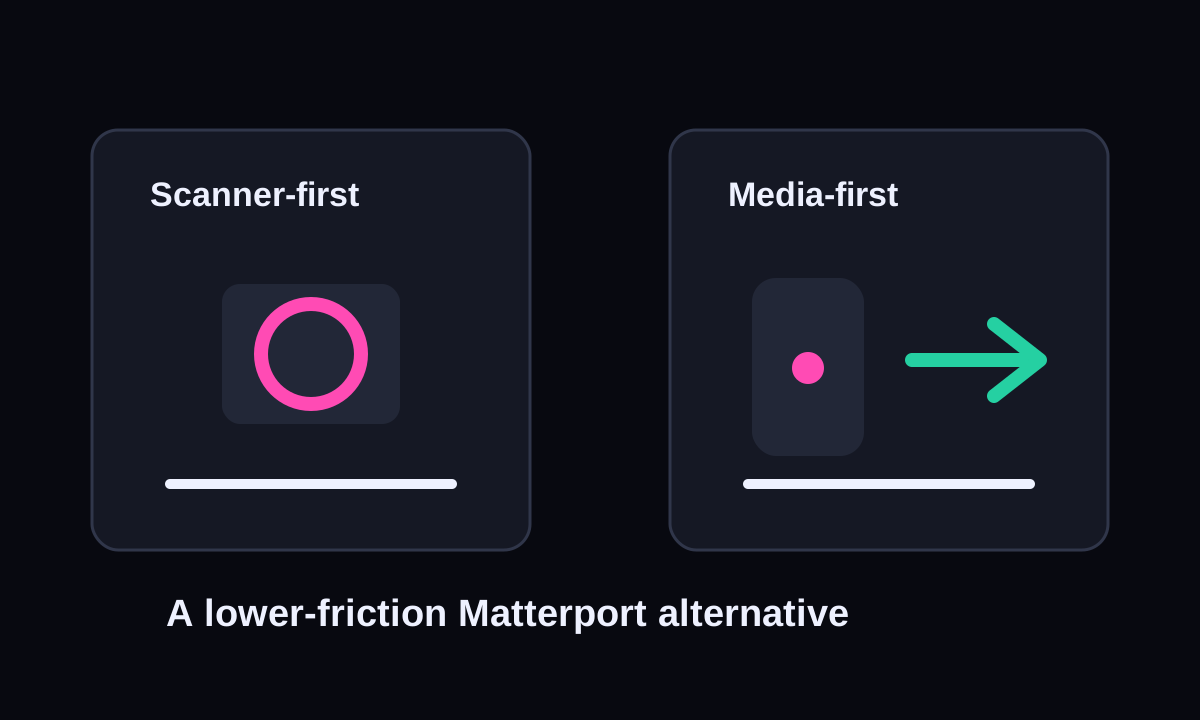
The single most important feature of any 3D tour platform is how easy it is to capture content. If capture requires special equipment, extensive training, or significant time investment, adoption rates plummet. Industry data shows that platforms requiring dedicated hardware achieve sub-20% agent adoption. Platforms using smartphone capture achieve 70-90% adoption. Evaluate capture ease by asking these questions. Does the platform require any equipment beyond a smartphone? If yes, what is the total hardware cost including accessories? How long does capture take for an average 2,000 square foot home? Does the platform provide clear capture guidelines and tutorials? Is there a mobile app or do you upload through a web interface? Can you capture without an internet connection and upload later? What happens if your capture quality is poor? Does the platform provide feedback or do you discover problems after processing? The ideal platform requires zero additional equipment, provides capture guidance, accepts uploads through a simple interface, and delivers feedback on capture quality before processing. SceneHost exemplifies this approach with smartphone-only capture, built-in guidelines, and quality validation.

2. Tour Quality: What Buyers Actually Experience

Tour quality determines whether buyers engage deeply or bounce after a few seconds. Quality has multiple components. Visual fidelity: how realistic does the tour look? Check texture detail, lighting accuracy, color reproduction, and absence of artifacts like holes, floaters, or distortion. Navigation smoothness: how fluid is movement through the space? Test on desktop, mobile, and tablet. Look for stuttering, lag, or disorientation. Loading speed: how quickly does the tour become interactive? Measure time from click to first interactive frame. Under 3 seconds is excellent. Under 5 seconds is acceptable. Over 5 seconds loses buyers. Immersion depth: does the tour feel like being there? Free-form 3D navigation creates stronger immersion than panoramic hotspot jumping. Evaluate this subjectively by exploring multiple tours and noting which feels most present. Feature richness: does the tour include useful features like information hotspots, floor plan overlays, starting viewpoint selection, and measurement tools? The right feature set depends on your use case. Residential agents need hotspot and floor plan features. Commercial agents need measurement tools. Test tour quality by creating a trial tour of your own property or office. Explore it on multiple devices. Share it with colleagues and collect feedback. A platform with great marketing but mediocre tour quality will disappoint your sellers and underperform for your buyers.

3. Capture Speed: Time Is Your Scarcest Resource

Every minute spent creating a tour is a minute not spent on income-generating activities. Capture speed directly impacts your effective hourly rate. Measure capture time from arrival at the property to completion of the capture process. Include setup, actual recording, and breakdown. Matterport scanning: 45-90 minutes. 360 camera capture: 20-35 minutes. Smartphone video: 10-20 minutes. The difference between 90 minutes and 15 minutes, multiplied across 30 annual listings, equals 37 hours of saved time. At $100 per hour opportunity cost, that is $3,700 in value. Processing speed also matters. How long from upload to live tour? Same-day delivery enables listing deployment within hours. Next-day delivery is acceptable. Multi-day delivery creates delays that matter in fast-moving markets. Look for platforms that process in under 2 hours for standard residential properties. Loading speed for buyers is equally important. 53% of mobile users abandon pages that take over 3 seconds to load. Test tour loading on 4G mobile connections, not just office WiFi. A tour that loads in 2 seconds on WiFi but 10 seconds on mobile loses the majority of its audience.

4-6. Cost, Hardware, and Mobile Performance

These three dimensions are straightforward to evaluate but require looking beyond headline pricing. Cost structure: calculate total first-year cost including hardware, subscription fees, setup fees, and per-tour processing charges. Then calculate ongoing annual cost. Compare across platforms using the same assumptions about your listing volume. Beware of platforms with low entry prices that escalate at higher usage tiers. Hardware requirements: document every piece of equipment needed including cameras, tripods, carrying cases, batteries, chargers, and accessories. Research replacement costs and availability. Consider what happens when equipment breaks on listing day. Can you still create tours? Mobile performance: test tours on at least three devices: a recent flagship phone, a mid-range phone from 2-3 years ago, and an older budget phone. Note loading times, frame rates, navigation responsiveness, and any crashes or glitches. 68% of real estate listing views happen on mobile devices. A tour that works perfectly on desktop but poorly on mobile fails the most important test.

7-9. Distribution, Analytics, and Lead Capture

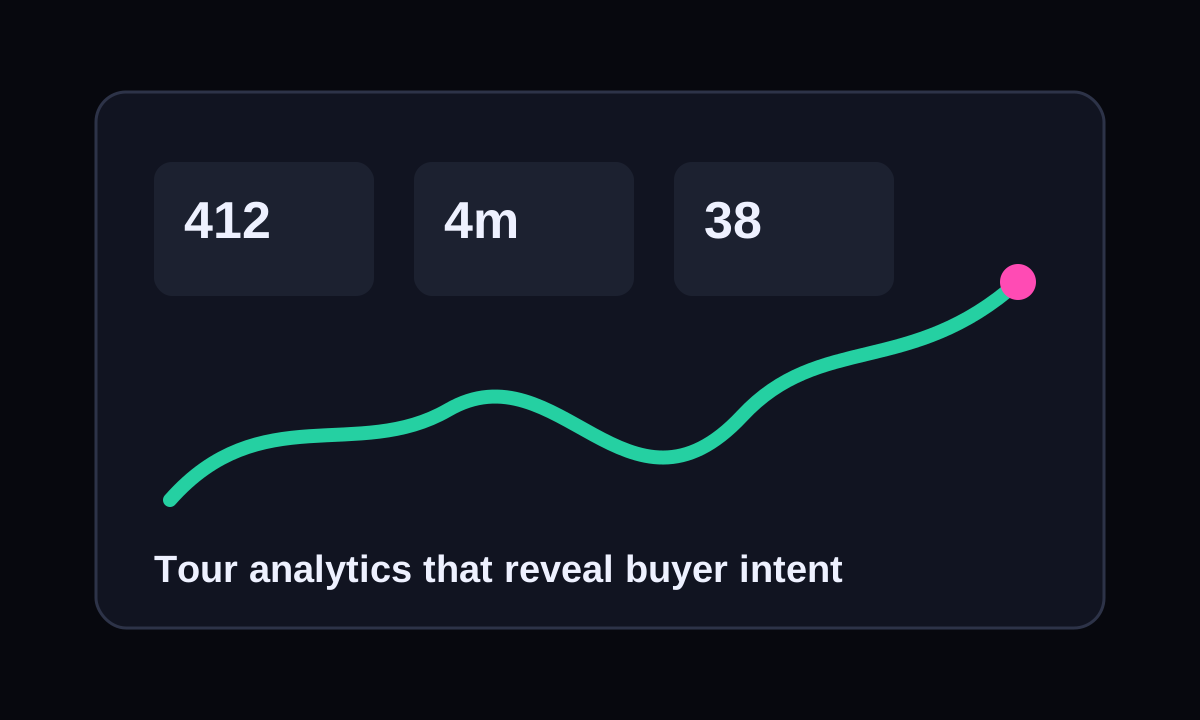
These three dimensions determine whether your tour generates measurable business value or simply looks nice. Distribution capabilities: does the platform provide a public tour page, iframe embed code, direct sharing links, social media integration, and MLS compatibility? Can you add custom domains? Does the tour page have proper Open Graph metadata for attractive social sharing previews? Test by sharing a tour on Facebook and checking how the preview card appears. Analytics depth: what metrics does the platform track? Minimum viable analytics include total views, unique viewers, average time spent, device breakdown, and geographic viewer location. Advanced analytics add session tracking, heatmaps of where viewers spend time, referral source tracking, and engagement scoring. Lead capture integration: does the platform include built-in contact forms, scheduling tools, or CRM integrations? Can you customize the lead form fields? Does the platform send lead notifications in real-time? Lead capture is the bridge between tour engagement and actual business. A tour without lead capture is a branding exercise. A tour with integrated lead capture is a lead generation machine.

10-12. Branding, Support, and the Final Decision

These final dimensions separate good platforms from great ones. Custom branding: can you remove platform logos and replace them with your own? Does the tour page match your brand colors, fonts, and imagery? Can you use custom domains so tours appear on your own URL? White-label options are essential for brokerages and teams building brand recognition around tour quality. Some platforms reserve white-labeling for enterprise tiers. Confirm availability at your intended subscription level. Customer support quality: test support before subscribing. Send a question through each channel: email, chat, and documentation. Measure response time and answer quality. Look for platforms with comprehensive knowledge bases, video tutorials, and community forums. The best support is rarely needed because the platform is intuitive. But when problems arise, responsive support prevents listing delays. The final decision should weigh dimensions based on your priorities. A solo agent should prioritize ease of capture, low cost, and mobile performance. A brokerage operator should prioritize scalability, branding, and support. A luxury agent should prioritize tour quality above all else. Create a weighted scoring matrix based on your specific needs. Test the top 2-3 platforms with actual listings. Choose the platform that scores highest on the dimensions that matter most to your practice.

Frequently Asked Questions

Q: Should I choose the cheapest platform available?

A: Not necessarily. The cheapest platform may lack essential features like lead capture, analytics, or mobile optimization. Calculate total cost of ownership including time investment and opportunity cost. A slightly more expensive platform that saves time and generates more leads often delivers better ROI.

Q: How important is white-label branding?

A: White-labeling is essential for brokerages and teams building brand identity. For solo agents, it is nice to have but not critical. Some agents prefer platform branding because established brands like Matterport signal quality to buyers.

Q: Can I try multiple platforms before committing?

A: Yes. Most platforms offer free trials, free tiers, or money-back guarantees. Create the same tour on 2-3 platforms and compare quality, features, and ease of use before making a final decision.

Q: What is the most overrated feature in 3D tour platforms?

A: Measurement tools are overrated for residential marketing. Few residential buyers use them, and they add significant cost when they require LiDAR hardware. Focus on immersion, navigation, and lead capture instead.

Q: Should I prioritize desktop or mobile performance?

A: Mobile. 68% of real estate listing views occur on mobile devices. A tour that performs well on mobile will perform excellently on desktop. The reverse is not true.

Q: How do I know if a platform's analytics are accurate?

A: Compare platform analytics against Google Analytics on the same tour page. Look for discrepancies in view counts and session durations. Minor differences are normal. Major discrepancies suggest inaccurate tracking.

Q: What red flags should I watch for when evaluating platforms?

A: Watch for hidden fees, long-term contracts with penalties, poor mobile performance, slow support response, frequent downtime, and tour quality that degrades over time. Also avoid platforms that claim to do everything well. Specialization usually produces better results.

SceneHost Implementation Notes

For SceneHost, the practical lesson is that this topic should be treated as a workflow, not a one-off feature. A real estate team needs a repeatable path from capture to publishing to follow-up. That means the product must make the next step obvious after every upload: confirm the media, process the asset, publish the hosted tour, share the link, watch engagement, and turn serious viewers into appointments or leads.

This is also why hosting content should connect directly to business outcomes. Agents do not buy software because the underlying file format is interesting. They buy it because it helps them win listings, reduce wasted showings, give sellers confidence, and move buyers faster from curiosity to action. Every SceneHost page should translate technical capability into those plain commercial benefits.

The recommended implementation is to pair each hosted tour with a simple checklist: capture quality, property description, lead form, embed placement, analytics review, and seller reporting. When those steps sit in one dashboard, SceneHost becomes more than a viewer. It becomes the operating layer for modern property marketing.

The SEO opportunity is equally important. Search demand around 3D tour hosting features, what to look for 3D tour platform, 3D tour platform checklist, real estate virtual tour requirements is fragmented across practical questions, comparison queries, and implementation problems. SceneHost can win by answering those questions in depth and then showing the reader exactly how the platform solves the workflow. That is the role of this guide in the broader content library.

For teams evaluating the category, the safest next move is to test the workflow on one active listing or rental. Record a normal walkthrough, publish the hosted 3D tour, send it to prospects before booking showings, and compare the quality of follow-up conversations. If fewer unqualified visitors request access and more serious viewers engage, the value becomes visible quickly.

A final operational benefit is consistency. When every listing, rental, or short-let uses the same capture checklist, hosted viewer, lead form, and analytics model, teams can compare performance across properties instead of guessing. That makes SceneHost useful to a solo agent, but it also gives brokerages and property managers a standard system they can train, measure, and improve over time.

The strongest rollout plan is simple: start with a high-interest property, publish the tour, add the link to every listing channel, and review engagement after the first week. Use the numbers to refine capture quality, listing copy, seller reports, and follow-up timing. That feedback loop is what turns 3D tours from a marketing extra into part of the sales process.

Create a hosted 3D property tour from your next walkthrough.

Upload normal property video, images, or a raw splat file. SceneHost handles conversion, hosting, embeds, analytics, and lead capture.

Upload a capture