Video to 3D property tour
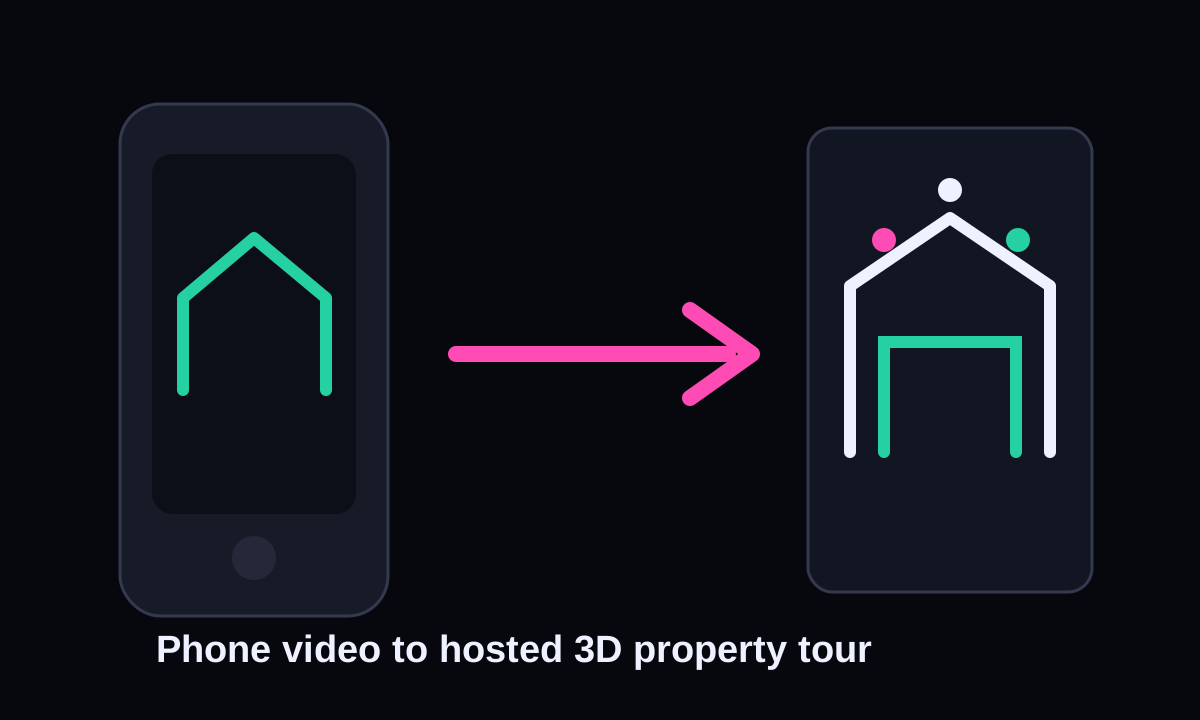
Turn ordinary property walkthrough video into a hosted 3D tour.
SceneHost gives agents, photographers, and property teams a practical path from a normal phone walkthrough to a public 3D tour page with embed code, lead capture, analytics, and SEO-friendly supporting content.
Why teams choose SceneHost
- Use the camera your team already carries instead of buying a dedicated scanning device before you know which listings need 3D.
- Publish the finished tour as a shareable URL, website embed, and measurable listing asset rather than another static media file.
- Connect tour engagement to follow-up with view time, repeat sessions, lead forms, and property-level analytics.
Who this workflow is for
Video-to-3D property tours are for teams that want the buyer experience of an explorable 3D listing without turning every capture into a specialist production day. A solo agent can record a steady walkthrough before photos, a leasing team can capture a vacant unit during turnover, and a photographer can add 3D delivery without carrying a separate scanning kit to every appointment. The key advantage is operational: the input is familiar, fast, and repeatable.
SceneHost is designed around that reality. The platform accepts normal video, image sets, and raw splat files, then turns the output into hosted tour pages. The result is not just a converted file. It is a marketing surface with a public URL, viewer, embed path, lead capture, and analytics that help the team understand whether the tour is producing serious buyer or renter attention.
The pain SceneHost removes
Most teams do not struggle because they dislike 3D tours. They struggle because the workflow usually asks for new hardware, new training, longer appointments, and another subscription to manage. That friction is why many listings still rely on photos and a short video even when remote buyers, relocating renters, and seller clients expect a richer preview. The cost of that gap shows up as avoidable showings, repeated questions, weaker seller reports, and less confidence from prospects who cannot understand the layout.
A video-to-3D workflow reduces that gap by using a capture motion agents already understand: walk the property slowly, keep the camera stable, cover each room with overlap, and upload. SceneHost then gives the team a hosted destination that can live in MLS notes, brokerage pages, email campaigns, paid ads, QR codes, and social posts. Instead of scattering media across disconnected tools, the tour becomes the central asset.
Capture and conversion process
Good input still matters. For the best result, record in bright, even light, move at a measured pace, and avoid abrupt turns. Start near the entry, walk through major rooms in a logical loop, pause briefly at transitions, and include the exterior or shared amenities when they influence buyer decisions. The capture should answer spatial questions that photos cannot: how the kitchen connects to the living room, where bedrooms sit relative to the entry, how natural light moves through the property, and whether the layout supports the viewer's use case.
After upload, SceneHost treats the capture as a publishing workflow. The source is stored, the conversion job is tracked, and the output is prepared for web viewing. When the tour is ready, teams can share the public page, embed the viewer, and review engagement. That matters because the value of a 3D tour is not only immersion; it is knowing which prospects explored deeply enough to deserve faster follow-up.
SEO, distribution, and internal linking
A hosted tour should support organic discovery as well as direct sharing. SceneHost pages are built for crawlable marketing context around the viewer, and this cluster page connects the video-to-3D workflow to deeper guides like the complete video-to-3D guide, smartphone tour capture advice, and comparisons against 360 cameras and Matterport. That internal linking helps search engines understand the topic while giving human readers a path from education to action.
Use the tour URL anywhere a prospect might evaluate the property before committing time. Add it to listing pages, seller update emails, rental inquiry replies, neighborhood landing pages, and retargeting campaigns. Then compare the engagement data against showing requests. If prospects who spend several minutes in the tour ask sharper questions and waste less appointment time, the workflow is doing more than looking modern; it is qualifying demand.
When to choose video-to-3D
Choose video-to-3D when capture speed, cost control, and repeatability matter more than running a premium scanning production for every property. It is especially useful for mid-market listings, rentals, short-term rentals, portfolios, and teams testing 3D coverage across more inventory. For flagship commercial scans, a specialist workflow may still be appropriate. For day-to-day property marketing, the lower-friction path usually wins because it actually gets used.
SceneHost also leaves room for advanced teams. If you already process Gaussian splats elsewhere, you can host raw outputs. If you need analytics, you can measure tour behavior after launch. If you are building an SEO moat, you can connect this page to the broader SceneHost blog, pricing, and upload flows. The point is to turn capture into a repeatable system instead of a one-off experiment.
Frequently Asked Questions
Can I use normal phone video for a 3D property tour?
Yes. SceneHost is built for ordinary walkthrough video as well as image sets and raw splat files. A steady, well-lit phone video gives the conversion pipeline the visual overlap it needs to create a usable hosted 3D tour.
How long should the walkthrough video be?
A typical apartment or single-family listing usually works best with a few minutes of steady footage. Larger properties may need longer coverage, but the goal is complete overlapping movement through the space rather than rushing through every room.
Where should I send people after the tour is ready?
Use the public tour URL in listing pages, emails, social posts, QR codes, and seller updates. You can also embed the viewer on your own site and link readers to SceneHost pricing or upload when they are ready to publish another tour.
Is this a replacement for Matterport?
For many marketing use cases, video-to-3D can replace a dedicated scan workflow because it is faster and easier to repeat. Matterport may still fit teams that need its hardware ecosystem or enterprise features, which is why SceneHost also publishes a detailed comparison guide.
Does SceneHost include analytics?
Yes. SceneHost is designed to treat tours as measurable assets, so teams can review sessions, engagement, lead capture, and follow-up signals instead of judging performance only by anecdotal feedback.
How long does processing take?
8-15 minutes depending on video length and quality settings. Preview quality is faster. Standard quality produces higher detail.
What phone works best?
Any modern smartphone with 4K video works. iPhones from 12-series onward and recent Android flagships produce excellent results. Key is steady movement, not camera resolution.
Publish a measurable 3D tour from your next property capture.
Start with a phone walkthrough, image set, or raw splat file. SceneHost handles hosted tour pages, lightweight embeds, analytics, lead capture, and the public URLs your marketing stack needs.
Upload a capture